














SoleChem

Aminoethylethanolamine

Alcohols & Glycols Textile, Leather & Paper
CAS
111-41-1
EC
203-867-5
Mol. Weight
104.15 g/mol

Description

Aminoethylethanolamine (CAS 111-41-1), commonly abbreviated as AEEA, is a bifunctional amine-alcohol used across polymer chemistry, surface treatment, and specialty chemical manufacturing.

Its dual reactive sites, a primary amine and a hydroxyl group, make it a building block for curing agents, crosslinkers, and pH-buffering intermediates. Monoethanol ethylenediamine is a recognized alternative name.

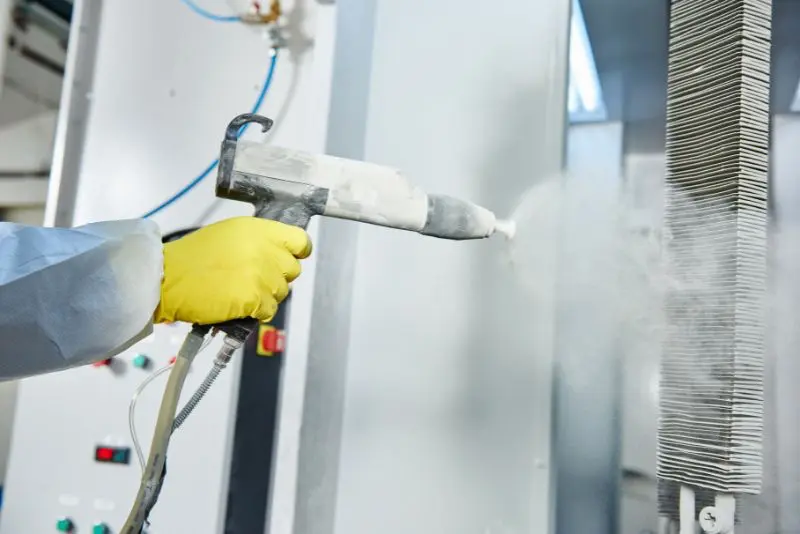
In coatings and adhesives, AEEA functions as a curing agent and crosslinker for epoxy systems, contributing to film hardness and adhesion performance in industrial finishes.

Textile and leather processors use it as a chemical intermediate for softeners, fixatives, and antistatic treatments applied during fabric and hide finishing processes.

In flame retardant formulations for plastics and polymers, AEEA serves as a reactive intermediate that becomes chemically incorporated into the polymer matrix rather than acting as an additive.

Paper treatment chemicals also draw on AEEA as a pH buffer and wet-strength resin intermediate. It is supplied as a clear to pale yellow liquid in drum and IBC quantities.

Bulk tanker options are available for high-volume procurement. Technical grade is the standard commercial specification for industrial applications, ensuring consistent performance across batches.

Purity levels are typically specified at 98–99% minimum. Buyers should confirm moisture content and amine value when qualifying suppliers to ensure the material meets specific process requirements.

Contact us for supply of Aminoethylethanolamine

Request Quote

Physical Properties

Melting Point -38 °C
Boiling Point 114 °C @ Press: 4 Torr
Density 1.0254 g/cm³ @ Temp: 25 °C
Flash Point >230 °F
Appearance Aminoethylethanolamine is combustible, colorless, liquid with an ammonia-like odor.
Color Clear Colorless
Odor mild ammoniacal odor
Form Liquid
Water Solubility soluble
Vapor Pressure <0.01 hPa (20 °C)
Refractive Index n 20/D 1.485(lit.)
pH 11.8 (111g/l, H2O, 20℃)
Log P -2.2--1.46 at 20-25℃ and pH7-11

Safety & Handling (Learn More)

Danger GHS05 GHS07 GHS08
Hazard Statements
H290 May be corrosive to metals
H314 Causes severe skin burns and eye damage
H317 May cause an allergic skin reaction
H318 Causes serious eye damage
H334 May cause allergy or asthma symptoms or breathing difficulties if inhaled
H335 May cause respiratory irritation
H360 May damage fertility or the unborn child
H373 May causes damage to organs through prolonged or repeated exposure
H402 Harmful to aquatic life
H412 Harmful to aquatic life with long lasting effects
Precautionary Statements
P203 Obtain, consult and follow expert instructions for use.
P233 Keep container tightly closed.
P234 Keep only in original packaging.
P260 Do not breathe dust/fume/gas/mist/vapours/spray.
P261 Avoid breathing dust/fume/gas/mist/vapours/spray.
P264 Wash … thoroughly after handling.
P271 Use only outdoors or in a well-ventilated area.
P272 Contaminated work clothing should not be allowed out of the workplace.
P273 Avoid release to the environment.
P280 Wear protective gloves/protective clothing/eye protection/face protection.
P284 In case of inadequate ventilation wear respiratory protection.
P316 Get emergency medical help immediately.
P317 Get emergency medical help.
P318 IF exposed or concerned, get medical advice.
P319 Get medical advice/attention if you feel unwell.
P321 Specific treatment (see … on this label).
P363 Wash contaminated clothing before reuse.
P390 Absorb spillage to prevent material damage.
P403 Store in a well-ventilated place.
P405 Store locked up.
P406 Store in a corrosion-resistant/… container with a resistant inner liner.
P501 Dispose of contents/container in accordance with local regulations.
P264+P265 Wash … thoroughly after handling.
P302+P352 IF ON SKIN: Wash with plenty of water.
P304+P340 IF INHALED: Remove person to fresh air and keep comfortable for breathing.
P333+P317 Get emergency medical help.
P342+P316 Get emergency medical help immediately.
P362+P364 Take off contaminated clothing and wash it before reuse.
P403+P233 Store in a well-ventilated place. Keep container tightly closed.
P301+P330+P331 Rinse mouth. Do NOT induce vomiting.
P302+P361+P354 IF ON SKIN: Take off immediately all contaminated clothing. Rinse skin with water/shower.
P305+P354+P338 IF IN EYES: Rinse cautiously with water for several minutes. Remove contact lenses, if present and easy to do. Continue rinsing.

Trade & Regulatory

HS Code 29221980
UN Number 2735
ADR Class 8
Packing Group II
Storage Class 6.1C - Combustible acute toxic Cat.3 toxic compounds or compounds which causing chronic effects
WGK (Germany) 1

Documentation

Other Names

N-(2-Hydroxyethyl)ethylenediamine|monoethanol ethylenediamine|RefChem:112035|2-(2-Aminoethylamino)ethanol|N-(2-Aminoethyl)ethanolamine|N-(Hydroxyethyl)ethylenediamine|N-(Aminoethyl)ethanolamine|Ethanol, 2-[(2-aminoethyl)amino]-|AEEA

Related Products

Need a chemical? Get a quote within 24 hours.

Call Request Quote