

















SoleChem

Zinc dibutyldithiocarbamate

CAS
136-23-2
EC
205-232-8
Mol. Weight
474.1 g/mol

Description

Zinc dibutyldithiocarbamate (CAS 136-23-2), commonly known as ZDBC, is an organozinc compound used as a secondary accelerator in rubber vulcanization and as a stabilizer in polymer processing.

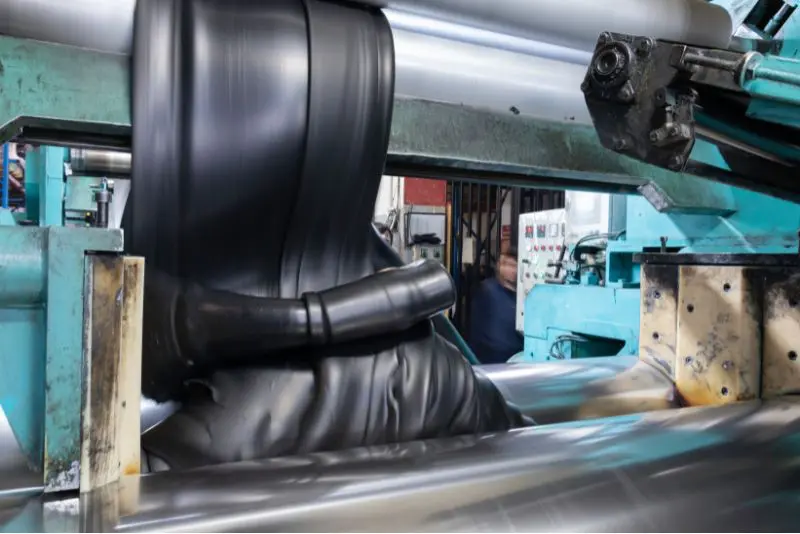
It delivers fast cure activation at moderate temperatures, making it a preferred choice for compounders seeking controlled processing windows. In rubber manufacturing, ZDBC functions as an ultra-accelerator.

This compound is essential for natural and synthetic rubber, particularly in latex goods, footwear, and industrial seals where consistent cure rates are critical for the final product quality.

Tire and technical rubber compounders use it in combination with primary accelerators such as sulfenamides to fine-tune scorch safety and crosslink density during the manufacturing process.

In plastics processing, it acts as a stabilizer and catalyst precursor in certain polymerization systems where zinc-based coordination chemistry is required for material integrity.

Personal care formulators have evaluated ZDBC as a preservation-active ingredient in specific rinse-off and leave-on systems, subject to regional regulatory compliance and safety standards.

Zinc dibutyldithiocarbamate is supplied as an off-white to pale yellow powder, with granule forms available for dust-reduced handling in industrial compounding environments.

Standard commercial grades are offered at high active content, typically 98% or above. Technical grade is the predominant market form, with documentation suited to industrial procurement requirements.

Contact us for supply of Zinc dibutyldithiocarbamate

Request Quote

Physical Properties

Melting Point 104-108 °C
Boiling Point 318°C[at 101 325 Pa]
Density 1.24 g/cm³ @ Temp: 20 °C
Appearance White powder; pleasant odor. Soluble in carbon disulfide, benzene, and chloroform; insoluble in water.
Color White
Odor wh. powd., pleasant odor
Form solid
Water Solubility 100μg/L at 25℃
Vapor Pressure 0Pa at 25℃
Log P 2.16 at 25℃

Safety & Handling (Learn More)

Warning GHS07 GHS09
Hazard Statements
H315 Causes skin irritation
H317 May cause an allergic skin reaction
H319 Causes serious eye irritation
H335 May cause respiratory irritation
H400 Very toxic to aquatic life
H410 Very toxic to aquatic life with long lasting effects
Precautionary Statements
P261 Avoid breathing dust/fume/gas/mist/vapours/spray.
P264 Wash … thoroughly after handling.
P271 Use only outdoors or in a well-ventilated area.
P272 Contaminated work clothing should not be allowed out of the workplace.
P273 Avoid release to the environment.
P280 Wear protective gloves/protective clothing/eye protection/face protection.
P319 Get medical advice/attention if you feel unwell.
P321 Specific treatment (see … on this label).
P391 Collect spillage.
P405 Store locked up.
P501 Dispose of contents/container in accordance with local regulations.
P264+P265 Wash … thoroughly after handling.
P302+P352 IF ON SKIN: Wash with plenty of water.
P304+P340 IF INHALED: Remove person to fresh air and keep comfortable for breathing.
P332+P317 Get emergency medical help.
P333+P317 Get emergency medical help.
P337+P317 If eye irritation persists: Get medical advice/attention. Get emergency medical help.
P362+P364 Take off contaminated clothing and wash it before reuse.
P403+P233 Store in a well-ventilated place. Keep container tightly closed.
P305+P351+P338 IF IN EYES: Rinse cautiously with water for several minutes. Remove contact lenses, if present and easy to do. Continue rinsing.

Trade & Regulatory

HS Code 2931.90.9051
Storage Class 11 - Combustible Solids
WGK (Germany) 2

Documentation

Other Names

Bis(dibutyldithiocarbamato)zinc|HNM5J934VP|Carbamodithioic acid, dibutyl-, zinc salt|dibutyldithiocarbamate zinc salt|Zinc, bis(dibutylcarbamodithioato-κS,κS′)-, (T-4)-|Zinc, bis(dibutyldithiocarbamato)-|ZDBC

Related Products

Need a chemical? Get a quote within 24 hours.

Call Request Quote