
















SoleChem

Ammonium thiocyanate

CAS
1762-95-4
EC
217-175-6
Mol. Weight
76.12 g/mol

Description

Ammonium thiocyanate (CAS 1762-95-4), also known commercially as Trans-aid and by the abbreviation NH4SCN, is an inorganic salt sourced for its flame retardant properties.

It functions as a reactive auxiliary in wet-process industries, delivering nitrogen- and sulfur-based chemistry that interrupts combustion pathways in polymer and fiber systems.

In textile processing, it acts as a dyeing auxiliary and anti-felting agent for wool, improving fiber receptivity and dimensional stability in finished fabrics during production.

Leather and paper manufacturers use it as a processing aid to modify surface characteristics and control shrinkage during treatment, ensuring high-quality material outputs for industrial use.

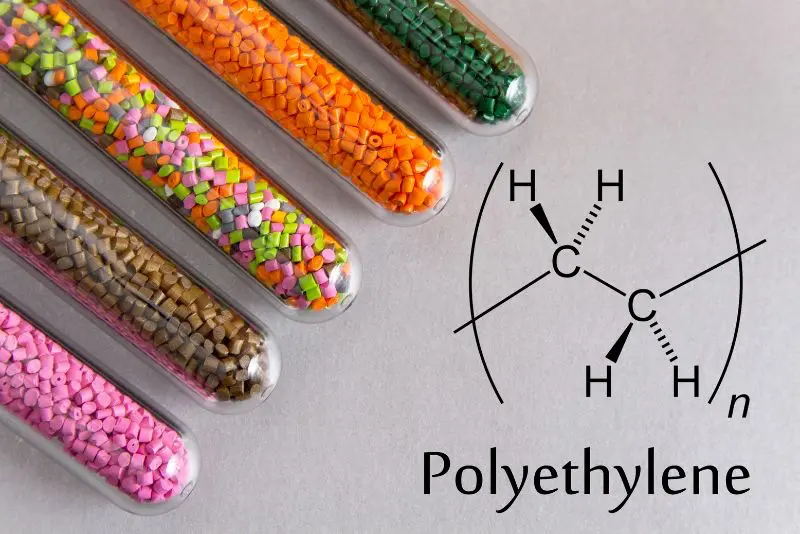
In plastics and polymer formulations, it contributes flame retardant performance, particularly in systems where halogen-free solutions are required to meet modern fire safety specifications.

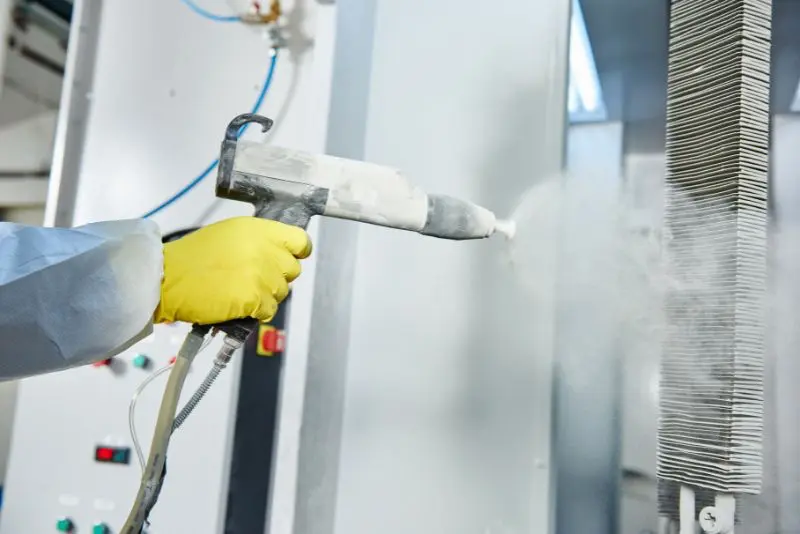
Building and construction applications include incorporation into construction adhesives and cementitious formulations where controlled set modification and flame retardancy are both required.

The product is supplied as a white crystalline solid, typically in powder or granular form. Technical grade is the standard offering for industrial applications with high purity levels.

Purity levels commonly range from 97% to 99%. It is packaged in moisture-resistant bags or drums given its hygroscopic behavior in standard warehouse storage conditions.

Contact us for supply of Ammonium thiocyanate

Request Quote

Physical Properties

Melting Point 149.6 °C
Boiling Point 195 °C
Density 1.3057 g/cm³
Flash Point 190 °C
Appearance Ammonium thiocyanate is a colorless solid which absorbs moisture, becoming liquid, known as the “liquor.”
Color clear colorless or white
Odor Odorless
Form Solid
Water Solubility 163 g/100 mL (20 ºC)
Vapor Pressure <1 hPa (20 °C)
Refractive Index 1.5300 (estimate)
pH 4.8-5.8 (50g/l, H2O, 20℃)
Log P 0.58

Safety & Handling (Learn More)

Danger GHS05 GHS07 GHS08
Hazard Statements
H302 Harmful if swallowed
H312 Harmful in contact with skin
H318 Causes serious eye damage
H319 Causes serious eye irritation
H332 Harmful if inhaled
H372 Causes damage to organs through prolonged or repeated exposure
H412 Harmful to aquatic life with long lasting effects
Precautionary Statements
P260 Do not breathe dust/fume/gas/mist/vapours/spray.
P261 Avoid breathing dust/fume/gas/mist/vapours/spray.
P264 Wash … thoroughly after handling.
P270 Do not eat, drink or smoke when using this product.
P271 Use only outdoors or in a well-ventilated area.
P273 Avoid release to the environment.
P280 Wear protective gloves/protective clothing/eye protection/face protection.
P317 Get emergency medical help.
P319 Get medical advice/attention if you feel unwell.
P321 Specific treatment (see … on this label).
P330 Rinse mouth.
P501 Dispose of contents/container in accordance with local regulations.
P264+P265 Wash … thoroughly after handling.
P301+P317 Get emergency medical help.
P302+P352 IF ON SKIN: Wash with plenty of water.
P304+P340 IF INHALED: Remove person to fresh air and keep comfortable for breathing.
P337+P317 If eye irritation persists: Get medical advice/attention. Get emergency medical help.
P362+P364 Take off contaminated clothing and wash it before reuse.
P305+P351+P338 IF IN EYES: Rinse cautiously with water for several minutes. Remove contact lenses, if present and easy to do. Continue rinsing.
P305+P354+P338 IF IN EYES: Rinse cautiously with water for several minutes. Remove contact lenses, if present and easy to do. Continue rinsing.

Trade & Regulatory

HS Code 28380000
Storage Class 13 - Non Combustible Solids
WGK (Germany) 1

Documentation

Other Names

Ammonium isothiocyanate|Trans-aid|Thiocyanic acid, ammonium salt|Ammonium rhodanide|Ammonium sulfocyanide|Ammonium rhodanate|Weedazol tl|Thiocyanic acid, ammonium salt (1:1)|NH4SCN

Related Products

Need a chemical? Get a quote within 24 hours.

Call Request Quote