
















SoleChem

Triisopropanolamine

CAS
122-20-3
EC
204-504-8
Mol. Weight
191.27 g/mol

Description

Triisopropanolamine (CAS 122-20-3), commonly abbreviated as TIPA, is a tertiary alkanolamine used across industrial and personal care sectors as a pH regulator, chelating agent, and crosslinker.

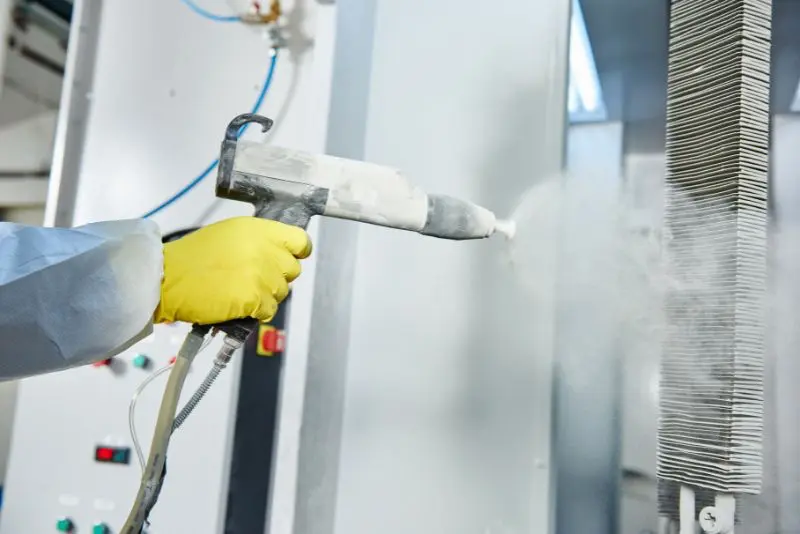
Its dual amine-alcohol functionality makes it effective in neutralizing acidic systems and coordinating metal ions within complex formulations. In coatings and adhesives, TIPA acts as a crosslinking agent and curing accelerator.

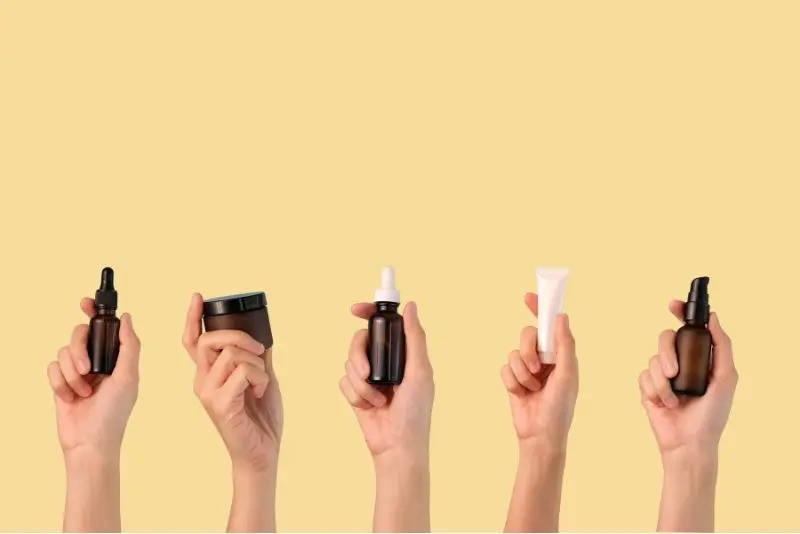
This chemical improves film hardness and adhesion in alkyd and epoxy-based systems. Personal care formulators use it to neutralize carbomer and acrylate polymers, adjusting pH in creams, lotions, and gels.

It functions without introducing harsh alkalinity to the final product. Water treatment applications rely on TIPA's chelating capacity to sequester calcium and magnesium ions, preventing scale formation in industrial process water.

In textile and leather processing, it functions as a pH buffer and auxiliary agent during dyeing and finishing operations. This supports consistent color uptake and surface treatment across various materials.

Triisopropanolamine is supplied as a viscous liquid or low-melting solid, depending on grade and temperature handling. Standard commercial grades include technical and industrial specifications for diverse needs.

Purity levels are typically at 85% and 99% for most applications. Bulk supply is available in drums and IBC containers, with technical-grade product being the most common form for industrial procurement.

Contact us for supply of Triisopropanolamine

Request Quote

Physical Properties

Melting Point 45 °C
Boiling Point 306 °C
Density 1.0 g/cm³
Flash Point 160 °C
Appearance white to slightly yellow crystalline low
Color White to slightly yellow
Form Crystalline Low Melting Solid
Water Solubility Soluble
Vapor Pressure 1 hPa (100 °C)
Refractive Index 1.4200 (estimate)
pH 10.8 (100g/l, H2O, 20℃)
Log P -0.015 at 23℃

Safety & Handling (Learn More)

Warning GHS07 GHS05
Hazard Statements
H315 Causes skin irritation
H318 Causes serious eye damage
H319 Causes serious eye irritation
H335 May cause respiratory irritation
H336 May cause drowsiness or dizziness
H412 Harmful to aquatic life with long lasting effects
Precautionary Statements
P261 Avoid breathing dust/fume/gas/mist/vapours/spray.
P264 Wash … thoroughly after handling.
P271 Use only outdoors or in a well-ventilated area.
P273 Avoid release to the environment.
P280 Wear protective gloves/protective clothing/eye protection/face protection.
P317 Get emergency medical help.
P319 Get medical advice/attention if you feel unwell.
P321 Specific treatment (see … on this label).
P405 Store locked up.
P501 Dispose of contents/container in accordance with local regulations.
P264+P265 Wash … thoroughly after handling.
P302+P352 IF ON SKIN: Wash with plenty of water.
P304+P340 IF INHALED: Remove person to fresh air and keep comfortable for breathing.
P332+P317 Get emergency medical help.
P337+P317 If eye irritation persists: Get medical advice/attention. Get emergency medical help.
P362+P364 Take off contaminated clothing and wash it before reuse.
P403+P233 Store in a well-ventilated place. Keep container tightly closed.
P305+P351+P338 IF IN EYES: Rinse cautiously with water for several minutes. Remove contact lenses, if present and easy to do. Continue rinsing.
P305+P354+P338 IF IN EYES: Rinse cautiously with water for several minutes. Remove contact lenses, if present and easy to do. Continue rinsing.

Trade & Regulatory

HS Code 29221990
UN Number 3259
ADR Class 8
Packing Group II
Storage Class 11 - Combustible Solids
WGK (Germany) 1

Documentation

Other Names

C9H21NO3|TIPA|TRIS(2-HYDROXYPROPYL)AMINE|Tri-2-propanolamine|Tris(2-propanol)amine|Tris(2-hydroxy-1-propyl)amine|2-Propanol, 1,1',1''-nitrilotri-|2-Propanol, 1,1',1''-nitrilotris-

Related Products

Need a chemical? Get a quote within 24 hours.

Call Request Quote