


















Adipic dihydrazide

CAS Number
1071-93-8
EC Number
213-999-5
Chemical Formula
C6H14N4O2
Molecular Weight
174.20 g/mol
Abbreviation
ADH

Description

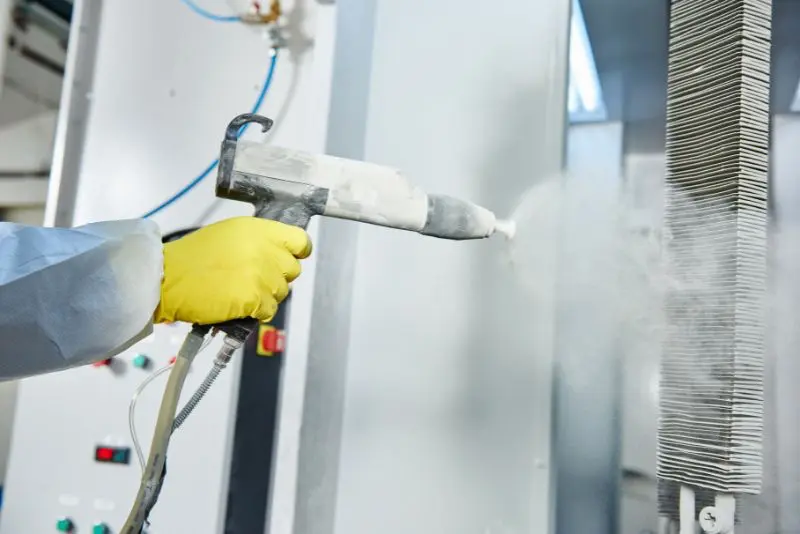
Adipic dihydrazide (CAS 1071-93-8), commonly abbreviated as ADH, is a bifunctional hydrazide used as a crosslinker and curing agent across coatings, adhesives, and polymer systems. It reacts with carbonyl-functional resins at ambient or low temperatures, enabling formulations to cure without elevated heat. In waterborne coatings, ADH crosslinks ketone-functional acrylic dispersions.

This process improves hardness, water resistance, and film durability in architectural and industrial finishes. Adhesive and sealant formulators use it to build cohesive strength in emulsion-based systems. It is particularly effective where thermal curing is impractical. In polymer chemistry, ADH acts as a chain extender and building block for polyurethanes, polyamides, and hydrogel networks.

These applications require controlled crosslink density for optimal performance. Personal care applications include its use as a stabilizer in formulations where carbonyl-reactive chemistry helps protect ingredients. This specific chemistry helps protect active ingredients from degradation over time. Adipic dihydrazide is supplied as a white crystalline powder available in technical and high-purity grades.

Specifications are typically defined by assay content, moisture levels, and melting point range. Packaging ranges from kilogram-scale bags to bulk quantities suitable for industrial procurement.

Other Names (Synonyms)

adipyl hydrazide|Adipic acid dihydrazide|Hexanedioic acid, dihydrazide|adipic hydrazide|VK98I9YW5M|AJICURE ADH|QUALIMER ADH|ADH

Key Technical Features

  • High Purity Grade standard
  • Consistent Batch Quality
  • Full Regulatory & REACH Support
  • Global Logistics Network enabled

Contact us for supply of Adipic dihydrazide

Request Quote

Physical Properties

Melting Point 180-181 °C
Boiling Point 305.18°C (rough estimate)
Density 1.2297 (rough estimate)
Flash Point 150 °C
Appearance white to slightly yellow crystalline powder
Color White to slightly yellow
Form Crystalline Powder
Water Solubility soluble
Vapor Pressure 0Pa at 25℃
Refractive Index 1.6700 (estimate)
Log P -2.7 at 20℃

Safety & Handling (Learn More)

Warning
GHS07· Irritant GHS09· Environmental Hazard GHS08· Health Hazard

Hazard Statements

H317 May cause an allergic skin reaction
H320 Causes eye irritation
H361 Suspected of damaging fertility or the unborn child
H400 Very toxic to aquatic life
H410 Very toxic to aquatic life with long lasting effects
H411 Toxic to aquatic life with long lasting effects

Precautionary Statements

P203 Obtain, consult and follow expert instructions for use.
P261 Avoid breathing dust/fume/gas/mist/vapours/spray.
P272 Contaminated work clothing should not be allowed out of the workplace.
P273 Avoid release to the environment.
P280 Wear protective gloves/protective clothing/eye protection/face protection.
P318 IF exposed or concerned, get medical advice.
P321 Specific treatment (see … on this label).
P391 Collect spillage.
P405 Store locked up.
P501 Dispose of contents/container in accordance with local regulations.
P264+P265 Wash … thoroughly after handling.
P302+P352 IF ON SKIN: Wash with plenty of water.
P333+P317 Get emergency medical help.
P337+P317 If eye irritation persists: Get medical advice/attention. Get emergency medical help.
P362+P364 Take off contaminated clothing and wash it before reuse.
P305+P351+P338 IF IN EYES: Rinse cautiously with water for several minutes. Remove contact lenses, if present and easy to do. Continue rinsing.

Trade & Regulatory

HS Code 29280090
Storage Class 11 - Combustible Solids
WGK (Germany) 3

Documentation

Call Request Quote