
















SoleChem

Pentasodium pentetate

Chelating Agents Food & Nutrition
CAS
140-01-2
EC
205-391-3
Mol. Weight
503.26 g/mol

Description

Pentasodium pentetate (CAS 140-01-2), commonly sourced and specified as Pentasodium DTPA, is a high-performance chelating agent used across industrial and consumer product manufacturing.

It binds and neutralizes metal ions, particularly calcium, magnesium, iron, and heavy metals, that would otherwise destabilize formulations, discolor substrates, or interfere with processing chemistry.

In personal care and cosmetics, it stabilizes bleach-based hair products and preservative systems by sequestering trace metals that catalyze oxidative degradation during the manufacturing process.

Pulp and paper processors use it to deactivate metal contaminants in bleaching baths, protecting peroxide efficiency and preventing fiber damage to ensure high-quality finished paper products.

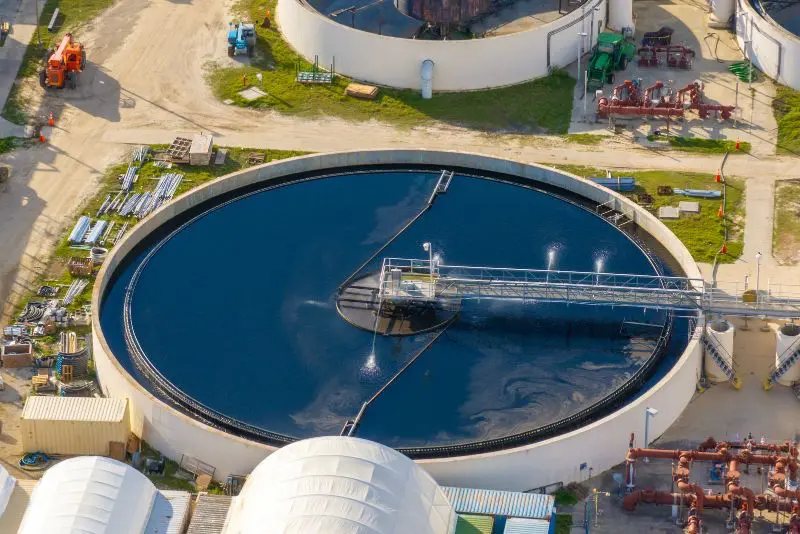
Water treatment and industrial cleaning formulations rely on it to prevent scale formation and maintain process equipment. In textile and leather processing, it controls metal interference during dyeing.

This improves color consistency and yield across various fabric types. Pentasodium DTPA is supplied as an aqueous solution, most commonly at 40% active concentration for industrial use.

Technical-grade and industrial-grade designations are standard across the market. Specifications vary by application sector, with cosmetic-grade material available for personal care compliance requirements.

Contact us for supply of Pentasodium pentetate

Request Quote

Physical Properties

Melting Point 178 °C
Boiling Point 106 °C
Density 1.29
Appearance clear light yellow solution
Color Clear
Form Solution
Water Solubility SOLUBLE
Refractive Index 1.4185-1.4205
Log P -2 at 25℃

Safety & Handling (Learn More)

Danger GHS07 GHS08
Hazard Statements
H315 Causes skin irritation
H319 Causes serious eye irritation
H332 Harmful if inhaled
H360 May damage fertility or the unborn child
H361 Suspected of damaging fertility or the unborn child
H371 May cause damage to organs
H372 Causes damage to organs through prolonged or repeated exposure
H373 May causes damage to organs through prolonged or repeated exposure
Precautionary Statements
P203 Obtain, consult and follow expert instructions for use.
P260 Do not breathe dust/fume/gas/mist/vapours/spray.
P261 Avoid breathing dust/fume/gas/mist/vapours/spray.
P264 Wash … thoroughly after handling.
P270 Do not eat, drink or smoke when using this product.
P271 Use only outdoors or in a well-ventilated area.
P280 Wear protective gloves/protective clothing/eye protection/face protection.
P317 Get emergency medical help.
P318 IF exposed or concerned, get medical advice.
P319 Get medical advice/attention if you feel unwell.
P321 Specific treatment (see … on this label).
P405 Store locked up.
P501 Dispose of contents/container in accordance with local regulations.
P264+P265 Wash … thoroughly after handling.
P302+P352 IF ON SKIN: Wash with plenty of water.
P304+P340 IF INHALED: Remove person to fresh air and keep comfortable for breathing.
P308+P316 Get emergency medical help immediately.
P332+P317 Get emergency medical help.
P337+P317 If eye irritation persists: Get medical advice/attention. Get emergency medical help.
P362+P364 Take off contaminated clothing and wash it before reuse.
P305+P351+P338 IF IN EYES: Rinse cautiously with water for several minutes. Remove contact lenses, if present and easy to do. Continue rinsing.

Trade & Regulatory

HS Code 29420000
Storage Class 6.1C - Combustible acute toxic Cat.3 toxic compounds or compounds which causing chronic effects
WGK (Germany) 3

Documentation

Other Names

Pentasodium DTPA|Pentasodium diethylenetriaminepentaacetate|Tetralon B|Trilon C|Versenex 80|Diethylenetriaminepentaacetic acid pentasodium salt|Plexene D|Syntron C|DTPA

Related Products

Need a chemical? Get a quote within 24 hours.

Call Request Quote