













Potassium carbonate

CAS Number
584-08-7
EC Number
209-529-3
Chemical Formula
CH2O3.2K
Molecular Weight
138.205 g/mol

Description

Potassium carbonate (CAS 584-08-7), also known historically as pearl ash and commercially listed as E501i, is an inorganic alkali used across food, industrial, and chemical manufacturing sectors. It functions primarily as a pH regulator, buffering agent, and reaction catalyst in a broad range of formulations and processes. In food production, it acts as a leavening agent and pH modifier.

This compound is essential in cocoa processing, noodle manufacturing, and confectionery, where controlled alkalinity directly affects texture and color. Glass and ceramic manufacturers rely on it as a flux. It is used to lower melting points in specialty glass formulations. In textile and leather processing, it serves as a scouring and dyeing auxiliary, helping to fix dyes and regulate bath pH during finishing.

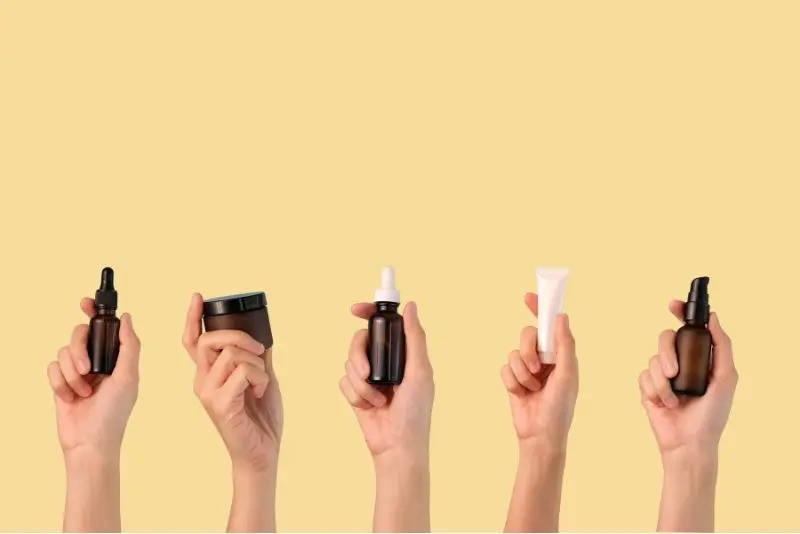
Personal care formulators incorporate it into hair care and skin preparations as an alkalizing agent to adjust product pH within target ranges. It is supplied as a white granular powder or fine powder. Granule grades are often preferred in industrial settings for reduced dust handling. Standard market grades include food-grade (E501i compliant), USP, and technical grade for various applications.

Purity levels typically range from 99% for food and pharmaceutical applications, with technical grades available for industrial use. This ensures compliance with rigorous global manufacturing requirements.

Other Names (Synonyms)

salt of wormwood|salt of tartar|pearl ash|Potassium carbonate, anhydrous|K2CO3|Dipotassium carbonate|Carbonic acid, dipotassium salt|carbonate of potash|E501i

Key Technical Features

  • High Purity Grade standard
  • Consistent Batch Quality
  • Full Regulatory & REACH Support
  • Global Logistics Network enabled

Contact us for supply of Potassium carbonate

Request Quote

Physical Properties

Melting Point 891 °C
Boiling Point 1333.6 °C
Density 2.29 g/cm³
Appearance white powder or granules
Color Yellow
Odor at 100.00?%. odorless
Form powder
Water Solubility 1120 g/L (20 ºC)
pH 11.5-12.5 (50g/l, H2O, 20℃)

Safety & Handling (Learn More)

Warning
GHS07· Irritant GHS05· Corrosive

Hazard Statements

H302 Harmful if swallowed
H315 Causes skin irritation
H318 Causes serious eye damage
H319 Causes serious eye irritation
H335 May cause respiratory irritation
H402 Harmful to aquatic life
H412 Harmful to aquatic life with long lasting effects

Precautionary Statements

P261 Avoid breathing dust/fume/gas/mist/vapours/spray.
P264 Wash … thoroughly after handling.
P270 Do not eat, drink or smoke when using this product.
P271 Use only outdoors or in a well-ventilated area.
P273 Avoid release to the environment.
P280 Wear protective gloves/protective clothing/eye protection/face protection.
P317 Get emergency medical help.
P319 Get medical advice/attention if you feel unwell.
P321 Specific treatment (see … on this label).
P330 Rinse mouth.
P405 Store locked up.
P501 Dispose of contents/container in accordance with local regulations.
P264+P265 Wash … thoroughly after handling.
P301+P317 Get emergency medical help.
P302+P352 IF ON SKIN: Wash with plenty of water.
P304+P340 IF INHALED: Remove person to fresh air and keep comfortable for breathing.
P332+P317 Get emergency medical help.
P337+P317 If eye irritation persists: Get medical advice/attention. Get emergency medical help.
P362+P364 Take off contaminated clothing and wash it before reuse.
P403+P233 Store in a well-ventilated place. Keep container tightly closed.
P305+P351+P338 IF IN EYES: Rinse cautiously with water for several minutes. Remove contact lenses, if present and easy to do. Continue rinsing.
P305+P354+P338 IF IN EYES: Rinse cautiously with water for several minutes. Remove contact lenses, if present and easy to do. Continue rinsing.

Trade & Regulatory

HS Code 28364000
Storage Class 13 - Non Combustible Solids
WGK (Germany) 1

Documentation

Call Request Quote